Showing posts with label challenge. Show all posts

Sunday, August 1, 2021

Vaccination Against Discontinuities

In order to follow the discussion in this article, it is imperative for you to read two previous articles (Continuity of Sustenance, Preparing for the Discontinuity of Sustenance). From this point on, I am assuming that you have read them.

So, we are in a quest to find a vaccine, or better a family of vaccines, against the discontinuities that threaten our existence and our faith due to their magnitude and extreme duration. This clearly is a research area and must be an ongoing one due to the ever changing life conditions and the ever improving methods and devices of evil. Below, I am sharing with you some of my conclusions from personal experiences and discussions with people.

An idea in this regard can be obtained from the example of the prophet Muhammad pbuh. Had he come today, what would he do in order to strengthen the faiths against the disturbing discontinuities? This question may sound nonsense and even ridiculous to you, because, one, he is not coming back, two, who are we to empathize with a messenger of God. Still, in the Quran, God tells that there are good examples in the person of the prophet for those who believe in God and the afterlife. So, why not try a time travel and pay a visit to our doctor?

"You have had a good example in God's Messenger for whosoever hopes for God and the Last Day, and remembers God often." (33/21)

The first event that draws my attention is the prophet's action during the battle of Hunayn. Initially, the Muslim army was dispersed and bewildered in the face of the enemy, and the Muslim soldiers were running back from the field. Upon seeing this, Muhammad pbuh stood against this flow and shouted as strong as he might: "I am the messenger of God, there is no lie in this." Such bravery gave a shock to the Muslims, because they realized that the prophet was standing alone and trying to fight against the enemy, all the while trying to call his friends to their senses. It didn't take too long for the Muslim army to recollect and execute a conclusive assault leading to victory.

This event is an analog to the discontinuities we are discussing. It shows that if you yourself are able to stand against the adversity, when others are bewildered or even giving up, that action of yours can function as a vaccination to your fellows. Allah sometimes guides his servants through the example of some other servants. And if He has blessed you with the faith, conviction, strength and guidance to stand against the adversities, then you must share your inspirations and ideas with others, remind them the conditions of their agreement with God, and trigger an immunity against disbelief. 


Another idea of vaccine can be found in the concept of patience. Patience is an indispensable component of survival in dire conditions. So, the activities, exercises that strengthen your patience can help you endure the extreme tests later on. For example, doing sports that take a long time and extreme effort to complete are superb for this purpose. Marathon running (quarter, half or full), mountain climbing are two such examples.

Similarly, a factor that undermines the will power and feeds depressive thoughts is the absence of a meaning in what is happening. Research has shown that people who see a meaning in their suffering can both endure the tough conditions better and can come out stronger, whereas those who see no meaning are more likely to fail or come out destroyed. So, practices that help us see a bigger picture in the complicated things or events can also help us survive the pitch dark times that seem like eternity. In this regard, making puzzles (500, 1000, or 2000 pieces) or other artistic productions that take long time to complete (embroidery, sculpture, painting, etc.) can be highlighted.


Next idea is Quran memorization. Here, I am not talking about memorizing only the short chapters. I am talking about memorizing several pages, or even tens of pages, even if you cannot memorize the entire Quran. There are several benefits coming with this. First, the reason we are trying to device a vaccine is that we want to become and remain loyal servants of Allah. So, having His living word with us wherever we go is a prime source of energy and help. Even when nobody can be with you, He can speak to you through His word that is in your mind. You can recite it for tens of minutes or even hours. The One who has the control over everything and the One who gives meaning to anything is communicating with you as you utter every single word of Quran. Another reason for Quran memorization is that it takes patience and effort to do, and knowing more of the Quran helps you see everything through better and larger lenses, which connect this practice to the two previous reasons.

Last but not the least, another vaccine suggestion that again connects to everything explained so far is doing good willed actions or charity projects that push you to your limits and beyond so that you must get out of your comfort zone and force things and people desperately, all the while praying to Allah for a successful end to your project. This effort is certain to bring you face to face with your Creator, and it is meant only for you to conduct that communication. That is, I cannot go beyond telling you to try it.

"Behold! Abraham said to his father and his people: 'I do indeed clear myself of what you worship. (I worship) only Him Who made me, and He will certainly guide me.' And he left it as a Word to endure among those who came after him, that they may turn back (to Allah)." (43/26-28)





Sunday, March 15, 2020

Anger Engine - 6

The connotation of anger is heat. Indeed, when angry, our body temperature increases and it becomes manifest on our faces. This state of ours, when explosively relieves itself, causes destructive results. Breaking things apart as such does not have to be the case, however. The same energy and power can be channeled to make permanent changes for the better.


In our study of anger towards God, we came to the point where we voluntarily decided to change things in ourselves. We started to work on a more direct and unmediated relationship with him. We were hoping to find, at last, peace with God and peace in our soul through such efforts. To our surprise, however, we realized that our All-Wise Guide wants us to do more and risk more! Why is it not enough for Him that we want to change ourselves?

There are several rays of wisdom shining from this enigma. First, God has different names and attributes, each having a different manifestation. Our state of anger towards Him, although forgivable through His mercy, requires a payment or a sacrifice as atonement. That is why we are pushed towards our limits, which may seem exacerbating the situation; but in fact, that state is a precursor to the peaceful days, as required by His compassion, mercy and generosity (2/214).

Second, the final word of God, Quran, is sent not as a library classic (25/30, 62/5) but as a genetic code to be brought alive through our deliberate and thoughtful actions (13/31, 59/21). Failing to do so is against the will of God. Therefore, He wants us to embrace the Quran wholly, and practice it even if it means going against the status quo, prejudices, social pressure or even if it means material loss (5/54). By pushing us to our limits in different aspects of life, several of them at the same time, the All-Wise Educator is ensuring that we are going to be obliged to explore the entire universe of the Quran. After all, it was us who had invited the tribulations by acting conservatively and risk-free by orbiting around the same, old planet (2/85).


Third, when we make a decision to change things in our selves, while crushed under the pressure of the unfortunate events, this is a reactionary state that is destined to fade by time. It does not warrant a permanent change (44/15). That is, even if we do things for a little while in the way pleasing to God, in the long run, as our feelings and anger sooth, we are likely to return to a robotic and conservative state, devoid of life and change. Quran is there to bring life to our relationship with God through His different names. So, our Lord pushes us to make irreversible changes both in ourselves and around us to cast a permanent improvement. He wants to ensure that we are not going to go back. Of course, He could do this using His infinite will and power, but that is against the notion of free will. So, our tolerant Lord prepares the grounds upon which we are going to take actions willfully. What those actions are depends on who we are and the circumstances we are in. We must read the Quran through the lens of the conditions surrounding us, which are likely to help us see the points that were previously invisible (50/22).

Fourth, if we are amidst unjust and unfair treatments, on one side it is us who must change, but on the other side, our environment must change, too. If God is telling us the signs of change through the tongue of misfortunes, He is also telling us by the same token to change things around ourselves as well. After all, justice and solidarity among people can not be established without healing the existing injustices. After all, the same mistakes are inevitable without changing the minds and paradigms. Ok but, how can you accomplish this daunting task, given that it is your failure thereof that has led to the tribulations and oppression crushing you?


This is where your faith goes into a challenge. If you do what is due to you and change yourself for the better, than on the other side of this contract is your Lord (2/40). He is the one to change what you are unable to. How He makes that happen is a matter of wonder. One thing is for sure, though. When He gives the reins to your hand in order for you to steer things towards the good, you must be ready for it. Realize that you cannot get ready for such mission if you don't get rid of the psychology of herd, if you cannot break free of slave mentality. You cannot prepare grand projects for the future, if your greatest ambitions are about recreating the past, which has been devastated by the Almighty. Looking into prosperous days requires you to trust in the power and will of your Merciful and Wise Lord, who is the cause of all causes.

So, the best time to make changes to ourselves is when we are angry and under pressure. It is also the best time to draft comprehensive plans to be  realized in the future. The readiness of those plans and your commitment thereof are not going to be wasted by the Exquisite Designer of the universe, who dislikes waste (6/95, 7/31). He is going to prepare not only the conditions but also the people so that you can achieve in short time what would be impossible for you otherwise.

GET READY.


Relevant Quranic verses to the topic: 

Children of Israel, recall My favors which you enjoyed. Fulfill your covenant with Me and I shall fulfill Mine. Revere only Me. (2/40)

... So do you believe in part of the Scripture and disbelieve in part? Then what is the recompense for those who do that among you except disgrace in worldly life; and on the Day of Resurrection they will be sent back to the severest of punishment. And Allah is not unaware of what you do. (2/85)

Or do you think that you will enter Paradise while such [trial] has not yet come to you as came to those who passed on before you? They were touched by poverty and hardship and were shaken until [even their] messenger and those who believed with him said,"When is the help of Allah ?" Unquestionably, the help of Allah is near. (2/214)

And what is [the matter] with you that you fight not in the cause of Allah and [for] the oppressed among men, women, and children who say, "Our Lord, take us out of this city of oppressive people and appoint for us from Yourself a protector and appoint for us from Yourself a helper?" (4/75)

O you who have believed, be persistently standing firm for Allah , witnesses in justice, and do not let the hatred of a people prevent you from being just. Be just; that is nearer to righteousness. And fear Allah ; indeed, Allah is Acquainted with what you do. (5/8)

O you who believe! Whoever of you reverts from his religion, (know that in his stead) Allah will bring a people whom He loves and who loves Him, humble toward believers, stern toward disbelievers, striving in the way of Allah, and not fearing the blame of any blamer. Such is the grace of Allah which He gives unto whom He wills. Allah is All-Embracing, All-Knowing. (5/54)

O believers, look after your own souls. He who is astray cannot hurt you, if you are rightly guided. Unto God shall you return, all together, and He will tell you what you were doing. (5/105)

Indeed We sent to nations before thee, and We seized them with misery and hardship that they might be humble; Then why, when Our punishment came to them, did they not humble themselves? But their hearts became hardened, and Satan made attractive to them that which they were doing. Then, when they forgot that by which they had been reminded, We opened unto them the gates of all things till, even as they were rejoicing in that which they were given, We seized them unawares, and lo! they were dumbfounded. (6/42-44)

Surely Allah causes the grain and the stone to germinate; He brings forth the living from the dead and He is the bringer forth of the dead from the living; that is Allah! how are you then turned away. (6/95)

O Children of Adam! wear your beautiful apparel at every time and place of prayer: eat and drink: But waste not by excess, for Allah loveth not the wasters. (7/31)

And if there was any qur'an by which the mountains would be removed or the earth would be broken apart or the dead would be made to speak, [it would be this Qur'an], ... (13/31)

And the Messenger cried out: O my Lord! surely my people have treated this Quran as a forsaken thing. (25/30)

And those who strive for Us - We will surely guide them to Our ways. And indeed, Allah is with the doers of good. (29/69)

We shall remove the torment for a while but you will revert to your old ways. (44/15)

Certainly you were heedless of it, but now We have removed from you your veil, so your sight today is sharp. (50/22)

Had We sent down this Quran on a mountain, you would surely have seen it humbling itself and rending asunder by the fear of Allah. Such are the parables which We put forward to mankind that they may reflect . (59/21)

The example of those who were entrusted with the Torah and then did not take it on is like that of a donkey who carries volumes [of books]. Wretched is the example of the people who deny the signs of Allah. And Allah does not guide the wrongdoing people. (62/5)


Wednesday, August 14, 2019

Emotion Management - 2

Feeling valued and having self-confidence are two great dynamics of the human soul, we said at the end of the last episode. And we also said, who, other than the infinitely powerful, infinitely generous and infinitely loving one, can satisfy the appetites and passions of the human soul? Nevertheless, these two dynamics are also at the heart of arrogance and rebellion against the Creator. So, the same emotions that surround our ego are both clouds of rain, bringing water of life, and are a veil depriving us of the Light of God.

Related image
Those who boast unjustly in the world, I keep them away from understanding my verses (signs) (7/146)
“Indeed, Allah is not timid to present an example - that of a mosquito or what is smaller than it. And those who have believed know that it is the truth from their Lord. But as for those who disbelieve, they say, "What did Allah intend by this as an example?" He misleads many thereby and guides many thereby. And He misleads not except the defiantly disobedient.” (2/26).
“So whoever Allah wants to guide - He expands his breast to [contain] Islam;” (6/125)
How come the same event or observation become a means of going astray for some and a means of guidance for others? The answer partly lies in the emotions that shape our vision, understanding and expectations into the future. A person without any ties to God and without any expectations of an afterlife is bound to formulate a world in their minds, where their judgment criteria are the standard of everything. And, that can lead to making God speak/act the way you desire (of course in your imagined reality).
And he entered his garden while he was unjust to himself. He said, "I do not think that this will perish - ever. And I do not think the Hour will occur. And even if I should be brought back to my Lord, I will surely find better than this as a return." (18/35-36)
Image result for inner fight

The same emotions that seek self-subsistence and boundless independence go on to silence the other emotions that voice the signs of God. In simpler words, for example today, rational explanation and scientific basis are at the heart of atheist claims, because using these tools deliberately, one can silence their certain emotions (or choke, should I say!), such as awe, that evoke the innate need to feel recognized and valued by your Creator. Famously known as "the need for love and belonging" that helps us find our Ever Close Lord is silenced by the scientific explanations that are formulated and worded in godless ways. This is not to say that science is essentially against faith, but the current dominant drive is accordingly.
And We sent to no city a prophet [who was denied] except that We seized its people with poverty and hardship that they might humble themselves [to Allah]. Then We exchanged in place of the bad [condition], good, until they increased [and prospered] and said, "Our fathers [also] were touched with hardship and ease." So We seized them suddenly while they did not perceive. And if only the people of the cities had believed and feared Allah , We would have opened upon them blessings from the heaven and the earth; but they denied [the messengers], so We seized them for what they were earning." Then, did the people of the cities feel secure from Our punishment coming to them at night while they were asleep? Or did the people of the cities feel secure from Our punishment coming to them in the morning while they were at play? Then did they feel secure from the plan of Allah ? But no one feels secure from the plan of Allah except the losing people. Has it not become clear to those who inherited the earth after its [previous] people that if We willed, We could afflict them for their sins? But We seal over their hearts so they do not hear. (7/94-100)
Related image

In the above verses, the people think that the events of life have nothing to do with being a message of God, and they happen on their own according to some dynamics that need to be determined through intellectual inquiry. That is, even if they initially had a suspicion that the life events could be signs of God, they insist on not heeding those emotions and silence them. Later on with the change of conditions, they go on with their evil actions saying "I told you. It is life with ups and downs. Just bear with it and make the most of it." But they turn out to be wrong, and they are not even able to understand this, because their emotions have created blockage between them and the larger reality. So, in their small-sized and short-lived realities, they feel independent of God in any way and experience emotions due to being the masters of their world until the predetermined end comes to them.
“We will show them Our signs in the horizons and within themselves until it becomes clear to them that it is the truth” (41/53). 
And how many a sign within the heavens and earth do they pass over while they, therefrom, are turning away. (12/105)
As some emotions are fighting against others, where is "I"? What is "I" doing? Is my free will non-existent in the face of my emotions? Some people today claim that free will, just like conscience, is an illusion, and that it is an emotional entity that lives in our minds, but otherwise, it has no reality. Can this be true?

Related image

Well, I should say that the above claim can be shown to be true, but with a logical flaw in the process. First, you must understand that seeing things free of your emotions is very difficult, if not impossible. Accordingly, we don't normally stay above our emotions and choose from them. They are like the lenses of our eyes; we see through them. We don't see without them. This is similar to analyzing the body and heart separate from each other. Both a heartless-body and a bodyless-heart are dead. Furthermore, they both need each other to manifest their abilities. Free will and emotions are alike. One can not deny the existence of one in the face of the other.

Second, if you assume that free will is non-existent at the outset, and use people who are solely at the mercy of their animal desires and drives, then you can show that by conditioning the minds, i.e. the emotions, you can manipulate the actions of those people as you wish. The logical flaw in this process is that silencing of the free will does not mean its non-existence. So, for the same processes, people who are trained to exercise their free will would respond differently, and perhaps unpredictably, and this would clearly punch a hole in the presumption of the experiment. What is more, you can use this mechanism to motivate people to do good and to do evil.

Related image

Is this mind experiment merely mental, or have there been cases throughout the history that prove the analysis we made here? The answer is yes to both. There have been numerous cases where people have been manipulated based on their animal drives, and were manipulated to commit evil actions (murder, theft, rape, etc.) against their conscience, hence a case lost for the free will. There have also been many cases where people acted opposite to the expectations, and exhibited altruistic, heroic or creative actions due to their belief in God and the afterlife.
Do the Unbelievers think that My servants can take protectors besides Me?... (18/102)
are men whom neither commerce nor trafficking diverts from the remembrance of God and to perform the prayer, and to pay the alms, fearing a day when hearts and eyes shall be turned about,(24/37)
Among the Believers are men who have been true to their covenant with Allah: of them some have completed their vow (to the extreme), and some (still) wait: but they have never changed (their determination) in the least: (33/23)
Image result for victory, surrealist


Sunday, August 11, 2019

Emotion Management - 1

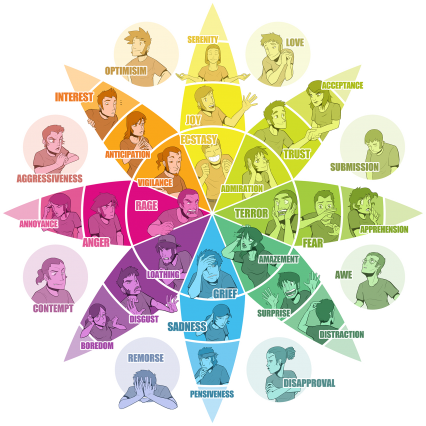
Emotions are one of the elements that separate humans from machines. What transforms a piece of metal to a valuable memory is the emotions associated with it. What makes a human being special for us is the emotions we harbor for them. And what inspires a good lesson out of any experience is the emotions that are triggered by it. So, it is important to explore the emotions and learn to manage them, because they are part of the secret behind the fact that we are alive, conscious and are accountable for our actions.

Emotions

You must have heard of time management, anger management, risk management, crisis management, perception management. How about emotion management? This is a concept that is newly emerging and gaining popularity due to its relation to how satisfied we are in anything we do or in life in general. I should say that I have a problem with this framework on emotions, because I think that emotions are not "an animal to be tamed and put into our service". Rather, I think that emotions belong to a larger picture that extends to infinity, where we are not necessarily the center of everything but where we are in relation to everything. The foremost of these relations is, of course, with our Creator, who equipped us with the emotions.

Reading through the Quran, you can come across with the situations where emotions are evident. In this first episode of "Emotion Management", we are going to start a journey through the Quran, during which we are going to see some examples and reflect upon them.
And if We give man a taste of mercy from Us and then We withdraw it from him, indeed, he is despairing and ungrateful. If after his hardship, We grant him a blessing, he grows proud and rejoicing and says, "All my hardships have gone". Except those who are patient and do good, they shall have forgiveness and a great reward. (11/9-11) 
But when He tries him and restricts his provision, he says, "My Lord has humiliated me." And as for man, when his Lord tries him and [thus] is generous to him and favors him, he says, "My Lord has honored me." (89/15-16)

Here, we see a person who, first, falls into despair due to hardship. Such despair, actually, stems from the subconscious supposition that "the good days are gone for ever". Depending on the depth and duration of the hardship, grief calls its twin-at-birth, i.e. anger. When not properly treated, grief triggers anger, which is originally aimed at destroying the cause of grief (see the story of prophet Moses in this context, 20/83-98). This is a psychological immune response for our well-being, but its uncontrolled action here is carrying its owner away from God. Remember that what exacerbates the situation is the magnitude and size of the misfortune, not in reality but, in our imagination. It is all about our expectations of the future. Just like getting angry towards your teacher, who is challenging you to improve yourself and thus destroying your comfort, is pointless, building mountains of imaginary losses when there is actually one or a few is irrational.

Our Sustainer wants us to see and stick to the reality, and He doesn't like despairing of Him. Then why did He create the link between grief and anger, which in turn creates complications on the way to Him? Yes, it is true that He created us and everything in us, but remember that He created us with a free will and with an auto-pilot. Our free will is the real us, but if we don't exercise our will in the proper way, then the auto-pilot kicks in to ensure our stability in existence. This is when the undesired results emerge. Plus, God clearly tells that He does not burden the humans with a load beyond their capacity (2/286), but sometimes the load may be more than what you are used to or greater than what you think you are capable of. In such cases, we humans may lean towards despair and rebellion as an auto-pilot reaction. Nevertheless in the long run, we are asked to take the reins of our free will and pull the stick up, as implied by the "forgiveness" mentioned in the above verses. Our merciful and compassionate God wants to see us and accompany us as we emerge from darkness to His light. And sometimes, He wants us to break the walls around us in order to open the way for other blessings.
Allah is the guardian of those who believe. He brings them out of the darkness into the light; and (as to) those who disbelieve, their guardians are the evil ones who take them out of the light into the darkness; they are the inmates of the fire, in it they shall abide. (2/257)

Returning to the above verses on human emotion in case of alternation of blessings and misfortunes, we are told that when God removes the restriction on the person, who has been hopeless and ungrateful until then, they go to the other extreme of "supposing everything will be fine for ever", a subconscious and irrational overgeneralization leading again to ungratefulness to the granter and sustainer of those blessings. So again, our Guide wants us to realize that neither the blessings nor the misfortunes occur on their own, nor are they unbounded. Everything takes place through a plan, and we are asked to trust our Supporter.
No disaster strikes upon the earth or among yourselves except that it is in a register before We bring it into being - indeed that, for Allah , is easy. (57/22)
These same notions, and more, are depicted in other verses, too, where, for example, the person goes on subconsciously thinking that they receive blessings either because they are special or because they deserved them.
So when harm afflicts a man he calls upon Us; then, when We give him a favor from Us, he says: I have been given it only by means of knowledge. Nay, it is a trial, but most of them do not know. (39/49)
The notion of deserving the blessings and honors, i.e. self confidence, is a reflection of ego, and it also exhibits itself in "the acceptance of the great trust by humans", whereby they accept being tested by the free will:
“Indeed, we offered the Trust to the heavens and the earth and the mountains, and they declined to bear it and feared it; but man [undertook to] bear it. Indeed, he was unjust and ignorant.” (33/72)
Feeling valuable and having self confidence for taking risks and accepting challenges are essential dynamics for the human soul. They are also helpful for taking refuge in God and seeking His accordance and help, because who, other than the infinitely powerful One, can meet the needs of a creature that has unbounded appetites and passions!