Showing posts with label wisdom. Show all posts

Thursday, April 16, 2020

Aboard Noah's Ark - 4

You are on the ark with Noah. What can be more fortunate? Well, God has more for you in His plan:
And certainly We wrote in the Book after the reminder that (as for) the land, My righteous servants shall inherit it. (21/105)
Allah has promised those who have believed among you and done righteous deeds that He will surely grant them succession [to authority] upon the earth just as He granted it to those before them and that He will surely establish for them [therein] their religion which He has preferred for them and that He will surely substitute for them, after their fear, security, [for] they worship Me, not associating anything with Me. But whoever disbelieves after that - then those are the defiantly disobedient. (24/55)

Although these Quranic verses were revealed not in context of the Great Flood, they certainly point at the same fact. Those who were rescued from that colossal destruction are promoted to a much higher level: being the inheritors of the land who are responsible for the amelioration of things after corruption. With responsibility comes authority, and vice-versa. Remember that the believers with Noah pbuh were the low level people in their society, but now, they became the highest and most powerful. This sharp intervention of God, which turns out a blessing for the believers and for the future generations to come, is surely another trial for the survivors, as the examination in this life goes on until death.
Every soul will taste death. And We test you with evil and with good as trial; and to Us you will be returned. (21/35)
Pondering over how to fulfill your responsibility, taking lessons from God's practice is a reasonable approach. Looking back, you see that God has been extremely patient with the disbelievers, and always instructed His messenger to call them to commonsense and critical thought. He warned them with afflictions before the final action. And in the end, He did not tell his messenger and the believers to fight against them, but to simply withdraw from them and busy themselves with the construction of the ark. During this period, the disbelievers started making fun of Noah, and he had simply replied with ironical threats. 
They said, "O Noah, you have disputed us and been frequent in dispute of us. So bring us what you threaten us, if you should be of the truthful." (11/32)
And he constructed the ship, and whenever an assembly of the eminent of his people passed by him, they ridiculed him. He said, "If you ridicule us, then we will ridicule you just as you ridicule. (11/38)

Finally, we know what happened. In fact, the same situation was also present during the time of the Prophet Muhammad pbuh.
They say, "If what you say is true, when will the final triumph come?" Say, "On the day of the final triumph, the faith of the disbelievers will be of no avail to them, nor will they be given any respite". (32/28-29)
So, a clear lesson from these is that to bring a decisive end to evil and to have a fresh start in good necessitates establishing a noteworthy and timeless lesson to the survivors through punishing the perpetrators of evil. If necessary, you have to amputate a limb in order to save the body. God willing, the stem cells are going to complete the missing part in time. 

This does not mean to eradicate evil from the face of the planet for good, though; because the rule of the game is that you can only curtail evil, but not annihilate it. For example, your anger may spur you to execute punishments in ways surpassing the limits of justice, when you were supposed to act in the name of God and justice. So, lesson two, beware of not becoming the seed of evil yourself.
O you who believe! Stand out firmly for Allah and be just witnesses and let not the enmity and hatred of others make you avoid justice. Be just: that is nearer to piety, and fear Allah. Verily, Allah is Well­-Acquainted with what you do. (5/8)

A third lesson in context of the anger against evil can be drawn from the definition of anger. It is the behavioral response of our immune system to repel evil (for further reading on anger, you can see the Anger Engine series in this blog: 1,2,3,4,5,6,7). Anger has the ability to muster all powers in our being to engender the desired safety and security. That is, when you are determined to get rid of something for good, you take irreversible action. You take a step that ensures that you will not return to the same conditions. Take differently, you do things such that they preclude the replay of the same events. In fact, if you are a wise person, you employ your anger to avoid the evil in the first place, instead of curtailing it after its establishment. Now let's see some examples of both cases.

If you compare dating and marriage, the former is a rather reversible act while the latter is relatively irreversible. That means if you want to step back from marriage after it is done, your return is going to have an irreversible toll on you. To highlight and commemorate this irreversibility, the two essential things that make a marriage licit in Islam are its announcement and the mahr (goods or money) given to the bride. These are there to avoid evil in the long run, which can occur when people take marriage as a game, i.e. a reversible step.

Other cases of irreversible, giant steps include the Israelites' story with Moses pbuh. In order to avoid a return to the pharaoh's regime, they were required to escape the city, by which they risked their lives. Once they escaped, there was no return, or else they would be killed. After this, when they fell to worshiping a cow statue, they were required by God to slaughter a real cow by their very hands so that they can see the absurdity of their practice, i.e. they had to slaughter their god!

Similarly, the first Muslims in Mecca had to migrate to Medina, by which they abandoned all their belongings and their loved ones. The first believers in Medina, on the other hand, gave up their internal deadly fights and forwent any revenge against each other. On top of forgiving each other, they undertook hosting their fellow migrant believers, and had to establish a mutual fraternity by which they shared not only their houses but also their wealth. Above all, these two communities, i.e. migrants and helpers, took all of the powers of the world then against themselves by proclaiming their faith and by embracing the messenger of God.

With these in mind, if you look at the recent history of the Middle East, you see that the nations that underwent a revolutionary transformation and cut their ties with their past achieved a real transformation, whereas the nations that assumed minimal modifications only went through a change of garment, without evolving really. I am not going to defend all of the events that took place during these periods in the twentieth century, but it is clear that decisive changes need and prerequisite irreversible and giant actions.

In the Noah's ark, as you and humanity are about to begin life anew, keep in mind that if you want future generations to embrace something and not give it up, they are going to have to make great sacrifices and work hard for them, just like you made when you took the faith introduced by Noah.


Monday, April 13, 2020

Aboard Noah's Ark - 3

Just like the elements of the creation, be them small or big, are messages from God, natural events, too, are signs and messages of God, be them ordinary or out of the ordinary.
Indeed, Allah is not timid to present an example - that of a mosquito or what is smaller than it. And those who have believed know that it is the truth from their Lord. But as for those who disbelieve, they say, "What did Allah intend by this as an example?" He misleads many thereby and guides many thereby. And He misleads not except the defiantly disobedient, (2/26)

Unfortunately, those who have molded their minds so that they will not see those messages even if posed explicitly cannot find true guidance. Instead, they seek alternative explanations and cover up the eyes of their hearts.
I will turn away from My signs those who are arrogant upon the earth without right; and if they should see every sign, they will not believe in it. And if they see the way of consciousness, they will not adopt it as a way; but if they see the way of error, they will adopt it as a way. That is because they have denied Our signs and they were heedless of them. (7/146)
We then replaced their misfortune with well-being until they were relieved and began saying, "Our fathers had also experienced good and bad days." Suddenly, We struck them (with torment) while they were all unaware (of what was happening). (7/95)
This is, perhaps, what had happened with the son of Noah, when he said that he could escape the flood by climbing a high mountain. In their view, this rain was the long awaited water after a drought that struck them hard, which in fact was a warning from God but which was missed by the people of Noah for the reason stated above.
Then I said, Ask forgiveness of your Lord, surely He is the most Forgiving: He will send rain to you in abundance (71/10-11)
And it sailed with them through waves like mountains, and Noah called to his son who was apart [from them], "O my son, come aboard with us and be not with the disbelievers." His son replied, "I shall climb up a mountain and this will save me from the flood." Noah said, "No one can escape on this day from God's command except those on whom He has mercy." The waves separated Noah from his son who was then drowned with the rest (of the unbelievers). (11/42-43)

Then, it is clear that the events that happen to us personally or as a society are communications from God in different languages. These languages can be in the civilized manner as in the admonitions of the holy books, or they can be in more physical forms such as economical crises, natural disasters, pandemics, wars... All in all, the message is clear. The will of God is established sooner or later, but whether we are going to benefit from it or lose badly depends on our choice of actions.
And if Allah were to impose blame on the people for what they have earned, He would not leave upon the earth any creature. But He defers them for a specified term. And when their time comes, then indeed Allah has ever been, of His servants, Seeing. (35/45)
Till, when the messengers despaired and thought that they were denied, then came unto them Our help, and whom We would was saved. And Our wrath cannot be warded from the guilty. (12/110)
It is also noteworthy that being in a society that is committed to evil, in and of itself, is a potential risk. If you are there and working to spread the message of God through your actions and communications, then you personally may be safe. However, extended duration of "no result", that is no change for the better, may be a sign that you shouldn't stay there anymore. Being in a decisively sinner community is also a risk in the sense that you yourself can shift towards them. After all, you are an individual in the face of a society. Even if you don't commit those sins yourself, you may start supporting their evils through various make-ups in your mind. So, one must separate from a sinning society at some point or at some depth. If you have to stay in there, you must detach your heart and/or your personal life from them to stay properly guided. Otherwise, you may find yourself at the same dreadful end.
And fear an affliction which may not smite those of you in particular who are unjust; and know that Allah is severe in requiting (evil). (8/25)

To sum up, an economic or political crisis or a war or a pandemic affects everybody. These events are for sure messages or afflictions from God, but those who have blinded their hearts won't be able to see this. Furthermore, joining the party of such blind hearted people, even if you don't actively do evil, is a fault in itself. In such cases, when the time comes, God establishes the order by force. These forces may be incomprehensible or invisible. The incomprehensibility, we talked about it. But what about invisibility? Angels? Yes, angels are part of the answer, but not the whole of it.
And to Allah belong the soldiers of the heavens and the earth. And ever is Allah Exalted in Might and Wise. (48/7)
When the angels are in action, this may be invisible to us, like a miraculous intervention, or it can be visible to us behind certain veils. For example, when the people of Lot were destroyed, it was the angels at work but in the appearance, a natural disaster of some sort was taking place. Similarly, during the Event of the Elephant (105/1-5) when the army that was about to destroy the Kaaba was itself destroyed by the birds, it was angels at work behind the veil. Again, during the Battle of the Trench (Handaq) in the Islamic history, the wind that made it impossible to stay outside, let alone fighting, was a clear, but invisible, help from God. It was fulfilled by the angels, but the manifestation of this help was an unyielding and endless storm.
O you who have believed, remember the favor of Allah upon you when armies came to [attack] you and We sent upon them a wind and armies [of angels] you did not see. And ever is Allah , of what you do, Seeing. (33/9)
After this journey to the future in time, if we snap back to our time on the ark, obviously those who have been blind towards the messages of God have been eradicated, and we are in an explicit coverage by God. Still, the same question bothers us, what to do to avoid a massive relapse to the heart blindness?


Saturday, January 25, 2020

Anger Engine - 3

Prophet Muhammad pbuh recommends taking action to calm your anger, when you feel so.
"When one of you becomes angry while standing, he should sit down. If the anger leaves him, well and good; otherwise he should lie down." (Abu Dawud, 4782, Grade: sahih)
“Anger comes from the devil, the devil was created of fire, and fire is extinguished only by water; so when one of you becomes angry, he should perform ablution.” (Abu Dawud, 4784, Grade: weak)

How can this recommendation shed light on our topic? What does it mean to sit down, for example, in case of anger towards God? Remember that anger narrows our focus and initiates actions that will remove the source of anger, not through the wisest but, through the shortest and quickest path. This kind of reaction, though, is detrimental in the case of faith. So, sitting or lying down when you are angry with God could mean, first, not to speak or act as if you are an unbeliever. That, however, doesn't mean suppressing your thoughts and feelings. Inside, you must discuss your matters with God, and when you are done making your point clear, you should listen to Him through all possible "ears". What are those ears? They are any language through which God can convey you a message. This can be His revealed book, serendipitous life events, natural events or nature itself, inspirations...

At this point, you may remember from the previous episode that a wisdom behind your situation could be that you were expected to "attack" your faith, but you failed to do so, hence your current situation. However cruel and outrageous it may sound, the real meaning hidden here is that, as a believer, you are not supposed to be a blind imitator; not according to Islam, at least. That's why God does not leave you on your own, sufficing with your confession of your belief in Him (29/2-3). Rather, He wants you to keep going and live adventures so that you can experience different manifestations of His names. This kind of life is going to increase your knowledge of God, make your faith in Him more authentic. Failing to do so, however, is going to leave your faith as a dry imitation, waiting to be crunched under the weight of life events. In short, as a human being, you are meant to make experiments with your faith, which may seem as attacking your faith, but which actually is a transformation of yourself to "faith in flesh and bone". 


In the story of Moses pbuh, we read many of such experiments. Although told by God to do certain things, from a purely human perspective, it is a suicidal idea for Moses to go to pharaoh both because he is accused of a murder and because he is going to dare to ask the unacceptable from the pharaoh. But Moses does it. Later on in his story, we see that at some point, after seeing the persistance of the pharaoh in disbelief and in oppressing the children of Israel, he goes really angry with the situation, because Moses does know that it is God who gave the pharaoh that wealth and power, by which he is exercising all kinds of evil acts, and that it is God who keeps the pharaoh in that highly capable position despite those evil acts. And yet, it is the same God who sends Moses to dare the impossible and risk everything. Seeing the inertia of the events and people, the mental constructs of Moses shake and he raises a reproach to God, followed by an angry prayer against the evildoers (10/88). Still, he wilfully goes on with submitting to God and with his God-given mission.

A similar occasion of reproach takes place following the visit of prophet Muhammad to Taif. After he invites the inhabitants of Taif to Islam, or at least to give him protection so that he can go on with his mission, not only they reject him but also they stone him and chase out of the city. Covered in blood, Muhammad takes a rest near an orchard and talk to his Lord:
"Into whose hands will You entrust me? Unto some far off stranger who will ill-treat me? Or unto a foe whom You have empowered against me? "
Yet, he does not let his resentment take over himself, and wilfully chooses to proceed with his submission to God and God-given mission, and says "I don't care as long as You are not angry with me."


Having seen the examples of the messengers of God, let's get back to us today. We had mentioned earlier that if you feel anger towards God, among other factors, three major candidates underlying this situation are:
  1. your knowledge of God is incomplete and/or contains errors.
  2. your perception of the events is incomplete and/or contains errors.
  3. your knowledge yourself is incomplete and/or contains errors.
The discussion so far expounds on the first. Before proceeding to others, though, I would like to highlight the importance of reading the book of God as a means of talking to God directly, without any intermediaries (i.e. translators, interpreters,.scholars). Remember, anything that stands between you and God are to be cleared. This is the essence of Islam.

The second item in the above list actually is linked to the topic of patience. In this life, we may not know what is going to happen as a result of what (31/34). That inherent uncertainty brings about a state of stress and anger. However, if one can try to direct that power of anger towards contemplation-based actions, rather than towards reactionary bursts, one can survive these times and can, actually, come out refreshed and renewed. Remember:
God changes not what is in a people, until they change what is in themselves. (13/11)
Finally, discovering what potentials God has sown in you is a duty on each and every individual, because God does not like wasting (7/31), and leaving those potentials idle is a clear act of wasting. Therefore, if you are assuming a life style in which everything is going into a routine and you are boiling yourself down to a mechanical servant, even if you are not neglecting the obligatory acts of worship, you can be forced by God to move. Even the stones move in remembrance and reverence of God (2/74)!
Has not the time yet come for those who believe that their hearts should be humble for the remembrance of Allah and what has come down of the truth? And that they should not be like those who were given the Book before, but the time became prolonged to them, so their hearts hardened, and most of them are transgressors. (57/16)


Thursday, January 16, 2020

Anger Engine - 2

If the feeling of anger is a behavioral manifestation of our immune system to avoid losses and damage, it makes sense that we get angry towards the loved ones more quickly, because loving means putting down your shields against someone and letting them be close to you beyond others. Believing in God, in this context, is a major cause for anger, because you are submitting your entire being and making yourself vulnerable to an entity who can do anything with you (3/40,47) with eternal and infinite impunity (21/23).


Linking back to some of the points raised in the first episode, a believer's expectation of good things from God prepares the grounds for anger towards Him, when and if those expectations are not only not met but also crushed with the exact opposite of the expectation. Still, it is intriguing that God constantly admonishes and orients the believers to be expecting of good things from Him and strive for the realization of favors. On one side, it is God who wants to be known as the bountiful and merciful, and on the other side, it is again Him who is creating anger towards Himself. Why is He doing this?

Before anything else, let's see some Quranic verses related to the engendering of the mentioned expectations:
Say, "What would my Lord care for you if not for your supplication?" (25/77)
Or, Who answers the distressed one when he calls upon Him and removes the evil, and He will make you successors in the earth. (27/62)
And your Lord says, "Call upon Me; I will respond to you." (40/60)
You will certainly ask Him for help. He will save you from hardship if He decides to do so and you will forget all about your gods." (6/41)
Call upon your Lord in humility and privately; (7/55)
And do not make mischief in the earth after its reformation, and call on Him fearing and hoping; surely the mercy of Allah is nigh to those who do good (to others).(7/56)
And when My servants ask you concerning Me, then surely I am very near; I answer the prayer of the suppliant when he calls on Me, so they should answer My call and believe in Me that they may walk in the right way. (2/186)
Say: Who is it that delivers you from the dangers of the land and the sea (when) you call upon Him (openly) humiliating yourselves, and in secret: (6/63)
Therefore remember Me, I will remember you, and be thankful to Me, and do not be ungrateful to Me. O you who have believed, seek help through patience and prayer. Indeed, Allah is with the patient. (2/152-153)
Unto Him is the real prayer. Those unto whom they pray beside Allah respond to them not at all, save as (is the response to) one who stretches forth his hands toward water (asking) that it may come unto his mouth, and it will never reach it. The prayer of disbelievers goes (far) astray. (13/14)
Recall your Lord if you forget to do something. Say, "I hope that my Lord will provide me better guidance."(18/24)
So call not upon another god with Allah, lest you be of those who are punished. (26/213)
And He answers those who believe and do good deeds, and gives them more out of His grace; (42/26)
and whoever is careful of (his duty to) Allah, He will make for him an outlet, And He will provide him from (sources) he never could imagine. And whosoever puts his trust in Allah, then He will suffice him. Verily, Allah will accomplish his purpose. Indeed Allah has set a measure for all things.(65/2-3)

At this point, it may be better to stop and recall your thoughts about the evil problem and "why God doesn't answer the prayers when and as asked". You may also make some outside reading, if you haven't done so, on these issues, because I am not going to do a discussion of those topics here. Rather, I want to keep my focus on the wisdom behind God's deliberate drive of individuals or humanity at large mad about Himself.

Of course, the One with infinite wisdom and knowledge and unbounded will power can design different paths of life for each individual. He can also guide people through innumerable ways towards what is pleasing to Him. And, being the ultimate judge on the judgment day, He can forgive or waive the things that we deem outrageous. In short, the first point to note here is that this is a subtle issue, in which we may not understand everything, or things may clarify much later. So, we have to accept that we may not have answers always to our guiding question.

In order to take a glance of the second point, think of these two situations and answer which one of them imply more love and belonging? First one is a case where person A is angry towards person B, but cannot voice it or prefers not to. Rather, person A shuts themselves towards person B. Second situation is again person A being angry towards person B, and voices their anger and frustration towards B, and B listens without echoing the same anger. Later on, person A and person B work out their relationship, and they reach an even stronger bonding.

It is clear in the above story that the lack of conflict in the appearance of the first case does not imply love and the presence of conflict in the latter does not imply lack of love. So, one has to admit the fact that they may go through situations in this life where their love and belonging may be put to test by means of "evil looking" events inducing anger towards God. Furthermore, one has to exercise their freedom of expression towards God. Of this needs to be done with the due respect. That is, addressing God when in public and addressing Him when in private requires different levels and kinds of respect. If you are angry, let it be known in private. If your soul is getting crushed, shout it from the depths of your heart, for it sure is heard. Perhaps this collapse of your mental and spiritual structures is among the aims attached by God to the calamity surrounding you.
"Letting go of anger toward God may not happen all at once. But each day, hand over your anger to Him. Thankfully we have a patient, kind-hearted God who can carry everything we bring to Him. Even our anger."
Adam Weber

Next, remember that anger narrows our focus to what is endangering us (89/16). It pushes us towards a destructive action. In the case of anger towards God, what can you destroy? God?

The only thing you can really destroy when you are angry with God is yourself. That includes your attitude towards God, i.e. your faith. And perhaps, this is exactly what is intended here! Shocking, as it may sound, attacking your faith actually can be part of the actions you were expected to take until then, but didn't. Let's dig in here.

If you were a person who didn't believe in God, you would get mad about people or things when you are faced with adversity. As your faith in God grows more authentic and stronger, you realize and feel the grasp and the control of God in life events, and so, it becomes increasingly harder for you to attribute the adversities to the people. You know for sure that God did not interfere with what happened or is happening! Fast forward, if you are eventually getting angry towards God in this situation, it is clear that you need a spiritual/mental "cardiac surgery". Given that God does not commit injustice (3/182, 8/51), there must be something wrong, which you are missing and which is driving you crazy. So what is it and why is it?

Three major candidates in this regard are listed below. As we later consider them one by one, you will see that they are very much interconnected.

  1. your knowledge of God is incomplete and/or contains errors.
  2. your perception of the events is incomplete and/or contains errors.
  3. your knowledge of yourself is incomplete and/or contains errors.


Tuesday, October 29, 2019

Conservation of Solitude

Reason, anger and lust are considered as the three fundamental powers of the ego. Each of these powers has its own source of energy and a field of deployment. In this article, I would like to delve into the power of reason, and then use it as a telescope to understand prophet Muhammad pbuh in a different way so that we can better emulate his example in our lives.
There has certainly been for you in the Messenger of Allah an excellent pattern for anyone whose hope is in Allah and the Last Day and [who] remembers Allah often. (33/21)

Reason is a distinctive property of the humans. Although the initial connotation of reason is individualistic, there is also collective reasoning through communication and through writing among individuals. Still, though, history testifies that revolutionary ideas and actions take spark from key figures, and spread from them. Masses, on the other hand, are associated with status-quo and constancy, and so, they need those unique individuals' initiative to reach a new state. As you can guess, such acceptance of a revolutionary idea or movement does not happen instantly. The society that will be the future home for that idea, more often than not, plays the antagonist during the developmental stage of the story. During this initial time period, those unique individuals who are the mothers of those ideas find solace in solitude.

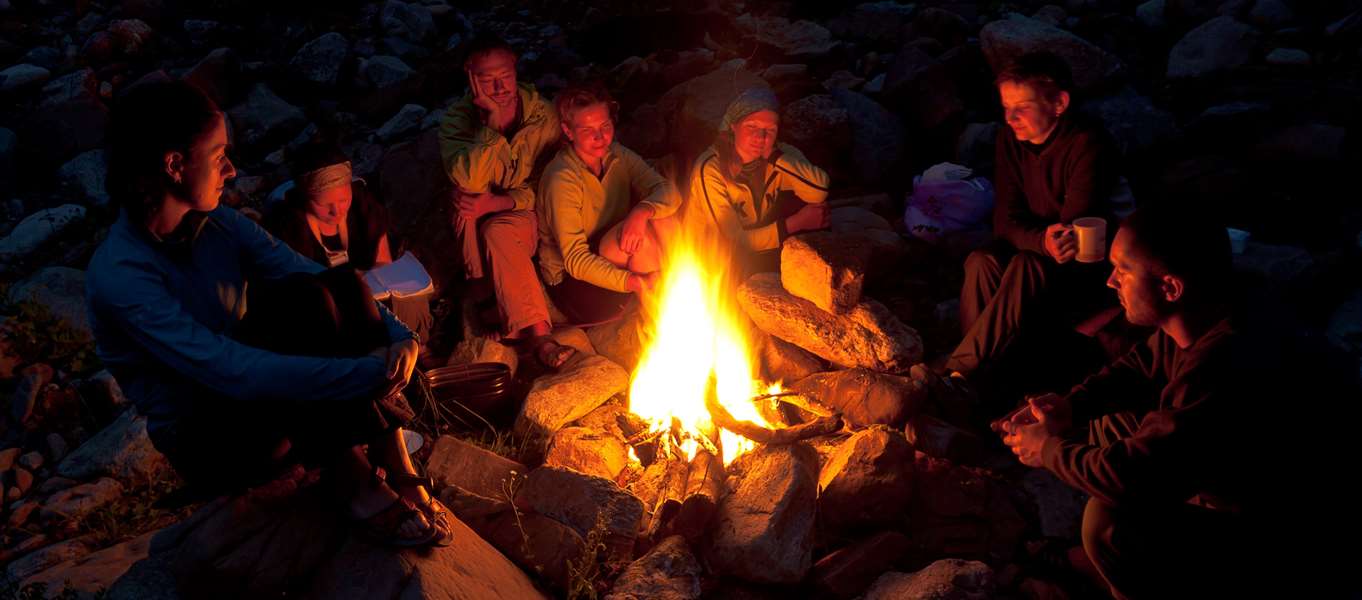
If you think of solitude, it may sound negative, especially in this time of ubiquitous social media invasion and addiction. Historically, solitude is especially sought by those who are after wisdom and enlightenment. Imagine yourself sitting around a camp fire with a group of people. Although you are with others, watching the fire captures your soul, and you find yourself being dragged into a world of your own where you are blown away by thoughts, emotions and inspirations. That is you find solitude, despite being surrounded by people. Be careful, this solitude is not being lonely!


Seeking solitude and having ample time for contemplation alone are traits observed in the lives of many timeless leaders of humanity, messengers of God most prominent among them. The life details of Muhammad, the last and the best documented messenger of God, provide a fertile ground of study in this regard. It is well known that he used to climb the Mount Nour, and take shelter in the cave of Hira to contemplate. These sessions would last for days or weeks. His wife, Khatijah, would bring him food and water during these periods so that he, Muhammad, could go on with his seclusion without interruption.

Nevertheless, it was not normal for anyone to stay alone in the wilderness for so long. Therefore, this state of seclusion was alarming at the same time. Muhammad himself can be included among those who were concerned about this strange state of his, since when eventually the angel brought the first revelation, his reaction was to question whether he was going crazy or being possessed.


Before we go on, I think it is important to take a moment and see the big picture so far. Wisdom is sought and found not by masses but by individuals. Furthermore, wisdom is found not among people but in solitude. Plus, wisdom is fast embraced not by the society but by the individuals of critical thought. Life stories of messengers of God, especially prophet Muhammad for that matter, make a good example of all these points.

With all the known facts about wisdom and the events prior to the onset of the mission of Muhammad, you would guess that seeking solitude and wisdom at mountain tops would remain as an indispensable component of the messenger's routine, but it does not!

On the contrary, in an increasing rate, he becomes a public figure who is almost always surrounded by others, and whose house is visited by people even at inconvenient times. Those who are familiar with the occasions of revelations for certain verses in the Quran and are well versed in the prophet's life would appreciate the severity of these situations.

So, what happened to the solitude-seeking person? Ask anyone who loves solitude, they are going to tell you that being alone is like water and air for them, and that they cannot do without it. We understand that the same was true of Muhammad pbuh. Then, what happened to this intrinsic need of his? Did it miraculously disappear?


No! As his mission to convey the message of God to people required him to be with people, he also needed to refuel himself by being one-to-one with his Lord. That is, being alone in his former life transformed into being alone during his salaah. However, since he had to do the obligatory prayers in congregation, his thirst for being alone was channeled by God towards the voluntary salaah, which he could do alone.
In this world, women and perfume have been made dear to me, and my comfort has been provided in prayer. (Sunan an-Nasa'i, 3939, grade: hasan)
Indeed, if you read through the books of hadith, you may not find too many occasions where the prophet was alone, but you can find countless occasions when he was offering voluntary prayers to Allah during the day or night. So, the "lonely thinker" of the former life was transformed to the "lonely worshiper" of the latter life.

Returning to us, here and now, along with the communication age, staying alone and contemplating has become a rare property. The business routine and the increasing pace of life are not favorable to the timeless attitude of wisdom. In all this, one way for the believers to accommodate this essential ingredient in their lives is by working on their salaah, and transforming it to the alone-time with the Eternal Light, as in the example of the messenger of God.
This is the Book about which there is no doubt, a guidance for those conscious of Allah -who believe in the unseen, establish prayer, and spend out of what We have provided for them, (2/2-3)